HOLISTIC EATING RECOVERY CLINIC
Recovery supports
Practical resources, clinical guides, and reading to support you or your clients through recovery
GUIDES & RESOURCES
Practical tools you can use today
Each guide is written from a dietitian's lens — compassionate, nervous-system aware, and grounded in real clinical experience.
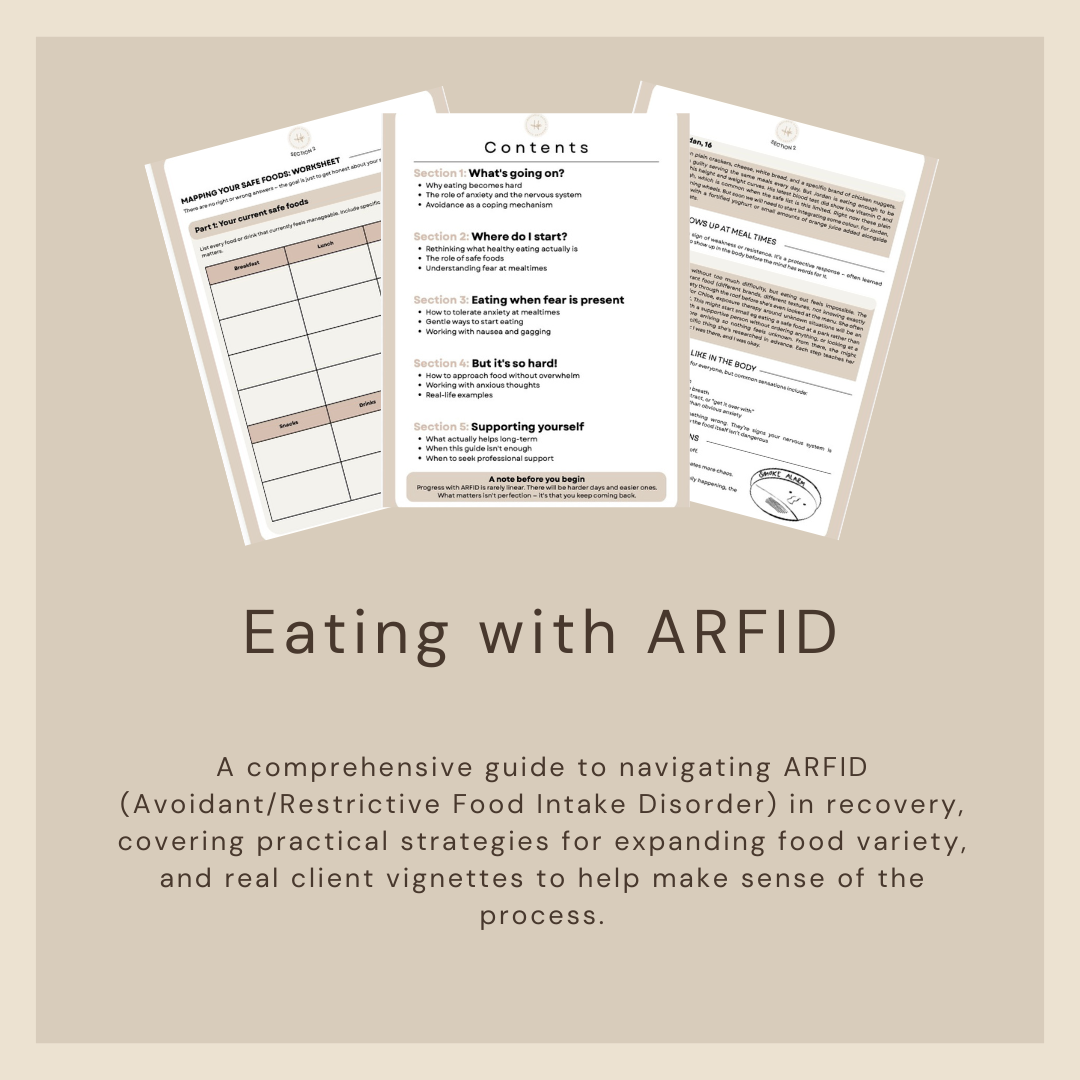
A 30-page evidence-based guide for individuals, families, caregivers, and health professionals navigating Avoidant/Restrictive Food Intake Disorder.
Written by Grace Russell, Accredited Practising Dietitian, this guide cuts through the confusion and shame around ARFID - and gets to what's actually happening in the nervous system around food.
Inside you'll find:
A clear explanation of the three presentations of ARFID (fear-based, sensory-based, and low interest)
The RAVES framework ARFID edition - a roadmap for what normal eating can actually look like
Practical strategies for eating when fear is present
How to work with anxious thoughts at mealtimes
Worksheets to map safe foods, identify patterns, and take one small next step
Real-life case examples across children, teens, and adults
This guide is most helpful for fear-based ARFID, and works well both as a standalone resource and alongside individual support from a dietitian or psychologist.
Instant digital download. PDF format.
Written by a dietitian.
For the humans in the room.
All resources are created by Grace, APD — compassionate, practical, and nervous-system aware.
FREE RESOURCES
Take something with you
Free downloads to support you between sessions — or just when you need something to hold onto.

Worksheet
Regular Eating for recovery
If you’re working on recovery, this guide outlines a simple structure to:
Stabilise blood sugar
Reduce binge/restrict cycles
Rebuild hunger and fullness cues
Decrease food preoccupation
Early recovery relies on structure, not intuition.
Use this as a starting framework.

Worksheet
Eating attunement
Once a regular eating pattern feels more stable, this guide helps you reconnect with your body's hunger and fullness signals. Use it to:
Notice early and true hunger cues
Recognise comfortable fullness
Separate physical hunger from emotional or habitual eating
Rebuild trust in your body's signals

Worksheet
Emotional Check-In
How am I feeling right now — and what do I need? A simple, guided check-in with feeling faces and practical options to help you identify and respond to your emotions.
Use it to:
Name what you're feeling, not just "good" or "bad"
Notice where emotion shows up in your body
Choose a practical next step instead of defaulting to food or avoidance
Build a habit of checking in before things build up
HOLISTIC EATING RECOVERY CLINIC
New worksheets, updates, and the occasional note from me — straight to your inbox
Stay in the loop

Instagram with me